

Epson Europe's Win-A-Robot Winners
A team from the Technological University Dublin – Tallaght Campus are among six winners from Epson Europe’s first ever Win-A-Robot contest, where education institutes from countries across EMEAR were invited to submit concepts that demonstrate how Epson’s T series industrial robots could be used in an innovative way. In addition to the Irish team, teams have been selected from institutes in the UK, Hungary, Germany and Italy, for their innovative submissions around cobotics, food sciences, AR, agriculture, deep learning and manufacturing.
The TU Dublin project aims to develop a range of innovative automated systems and sensors that can be used to automate the hydroponic process to grow high value crops including microgreens and herbs. The new robot will be used by both undergraduates and postgraduates in modules and research projects. The projects that this robot enables cover a huge range of disciplines including soft robotics, control and automation of growing systems and plant growth sensors.
The successful project team includes Paul DIllon, Lucy McAuley and Gerard Ryder from the Department of Mechanical Engineering on the TU Dublin Tallaght Campus.
Dr Gerard Ryder an investigator on the project said:
“2019 is an exciting year for us – as the Institute of Technology Tallaght joins with Dublin Institute of Technology and Institute of Technology Blanchardstown to become part of the new Technological University Dublin, we are excited to have Epson’s support to be able to expand our research and teaching.”
Paul Dillon the other investigator on the project added – “We have just completed a range of undergraduate projects on topics related to this award including projects on soft robotics, vision systems for plant monitoring and the instrumentation and control of hydroponic and agricultural growing environments. This robot will add a new dimension to this research.”
The judging panel had a strict set of criteria, taking note of the strength of each application against criteria of innovation, education, skills development, sustainability and unique robot usage. The jury, which consisted of five robotics experts from the fields of policy, industry and academia, came together in Meerbusch, Germany, to deliberate and select the winning applications. The panel consisted of:
Professor Darwin Caldwell, Italian Institute of Technology;
Eva Kaili, Member of the European Parliament;
Dr Imre Paniti, Hungarian Academy of Sciences;
Patrick Schwarzkopf, Managing Director, VDMA Robotics + Automation, and
Yoshifumi Yoshida, Epson Executive Officer
With the robotics industry set to be a €1.05 trillion business by 2025, Epson is committed to expanding applications of its robots to help create a world in which robots support people in a wide variety of situations and meet market demands with a cost-effective solution.
Epson Europe’s Win-A-Robot contest is helping to lower the barriers to automation, supporting education and the development of new automation solutions.
“Robotics and automation will play a massive role in supporting the competitiveness and growth of European business for the future,” said Volker Spanier, Head of Robotics Solutions for Epson Europe as he announced the contest winners.
“Ensuring that students of today are prepared and excited to take on that challenge is of incredible importance, and Epson look forward to working alongside the talents of tomorrow to grow and develop their skills, and projects in that direction. We see this announcement as just the beginning of fruitful, long-term relationships with universities across EMEAR.”
Other official winners of Epson’s 2018 Win-A-Robot contest include:
Plymouth University with their robotics and design industry demonstrator
University of Pecs, Hungary, with their ‘Robot Control with Augmented Reality Glass’ project
Heinz-Nixdorf-Berufskolleg, Germany, with their ‘Simulation of an Online Trade Using the Example of a Candy Filling Plant’ project
University of Padova, Italy, with their ‘ChocoBot – Energy-efficient Customized Decoration of Celebration Cakes and Rapid Prototyping of Big Chocolate Structures’ project
University of Pavia, Italy, with their ‘Deep Learning for Safe Physical Human-Robot Interaction’ project.
Over the coming months, Epson Europe and its partners will work closely with the institutions following the receipt of their Epson robots, providing support and training to ensure the winning teams and wider student body are able to get the best use from their robot.

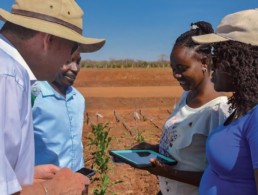
Tech-driven agriculture holds promise for African youth
From the agricultural use of drones in Mozambique to solar irrigation systems in Niger, the African continent is embracing digital technologies to boost its food productivity and profitably – and that only becomes a more critical goal as young populations grow across the coming decades.
That’s one reason why youth is at the center of a recent report from the Malabo Montpellier Panel. The 17-member panel is made up of African experts, along with a few Europeans and an Indian, and led by Ousmane Badiane of Senegal and Joachim von Braun of Germany.
Food security and agricultural production are its core mission, and the “Byte by Byte” report advances an understanding of how information and communications technology (ICT) applications can transform the future of African farming. That’s especially critical in an era of climate change, which some experts warn is already threatening the gains in eradicating hunger and extreme poverty made in recent years.
Climate change and African challenges
A separate study released at the end of May suggests that’s the case. Scientists from Denmark and the United States looked at production of top world crops – barley, cassava, maize, rice, oil palm, rapeseed, sorghum, sugarcane, soybean and wheat – and found that “projected” impacts aren’t all in the future.
Some of those impacts are visible now. South Africa has seen a 12 percent reduction in the calories these crops provide; Zimbabwe has seen a 10 percent drop, the PLOS study said, and Ghana saw an 8 percent loss. There are many variables among crops, and some regions see improved yields – cassava in particular – but on balance there’s an annual 1.4 percent loss in the crops, or 0.8 percent in total diet calories, across sub-Saharan nations.